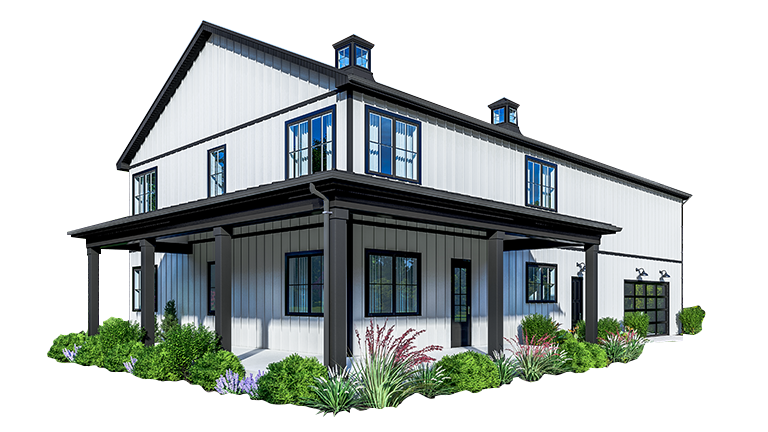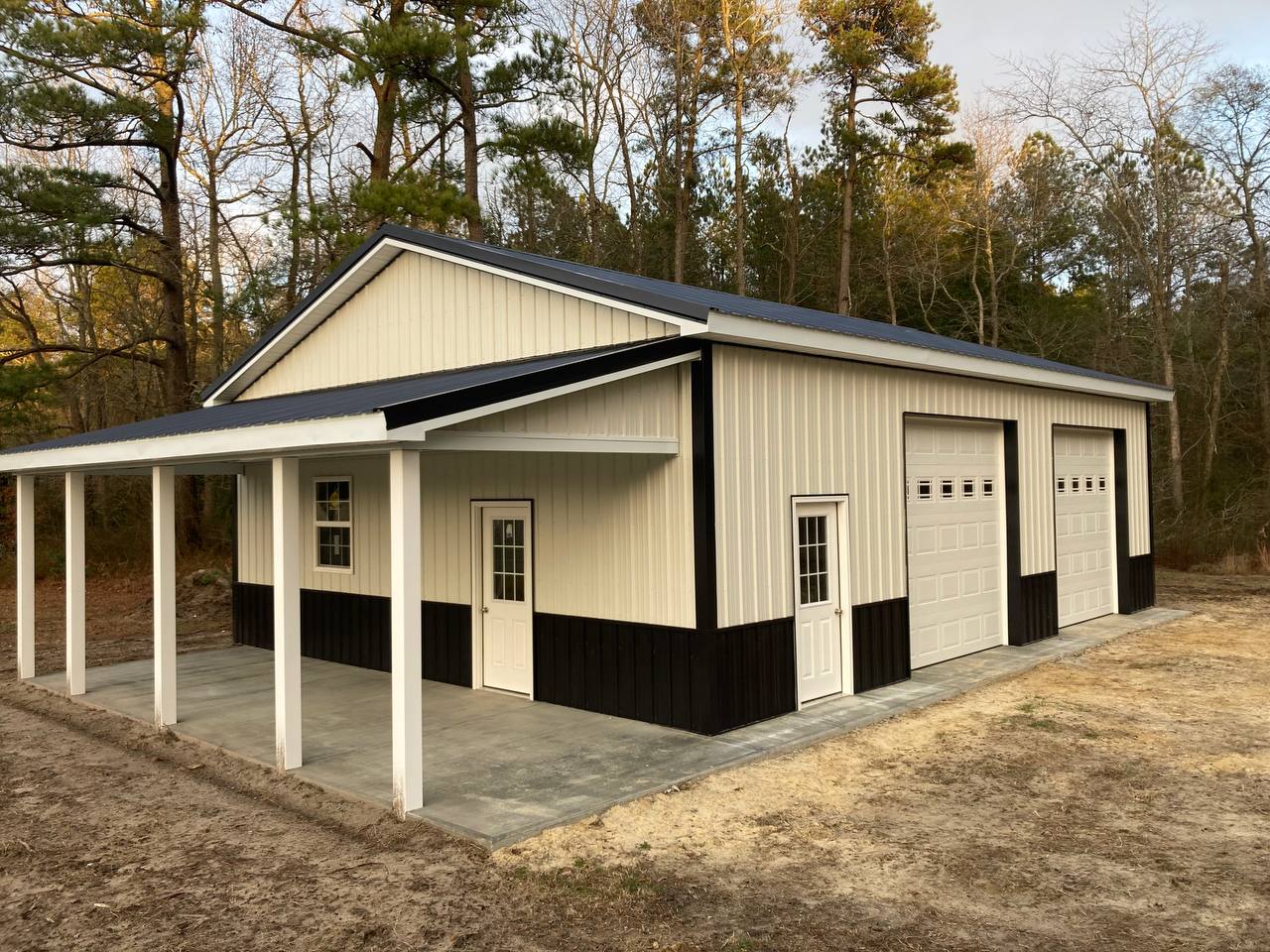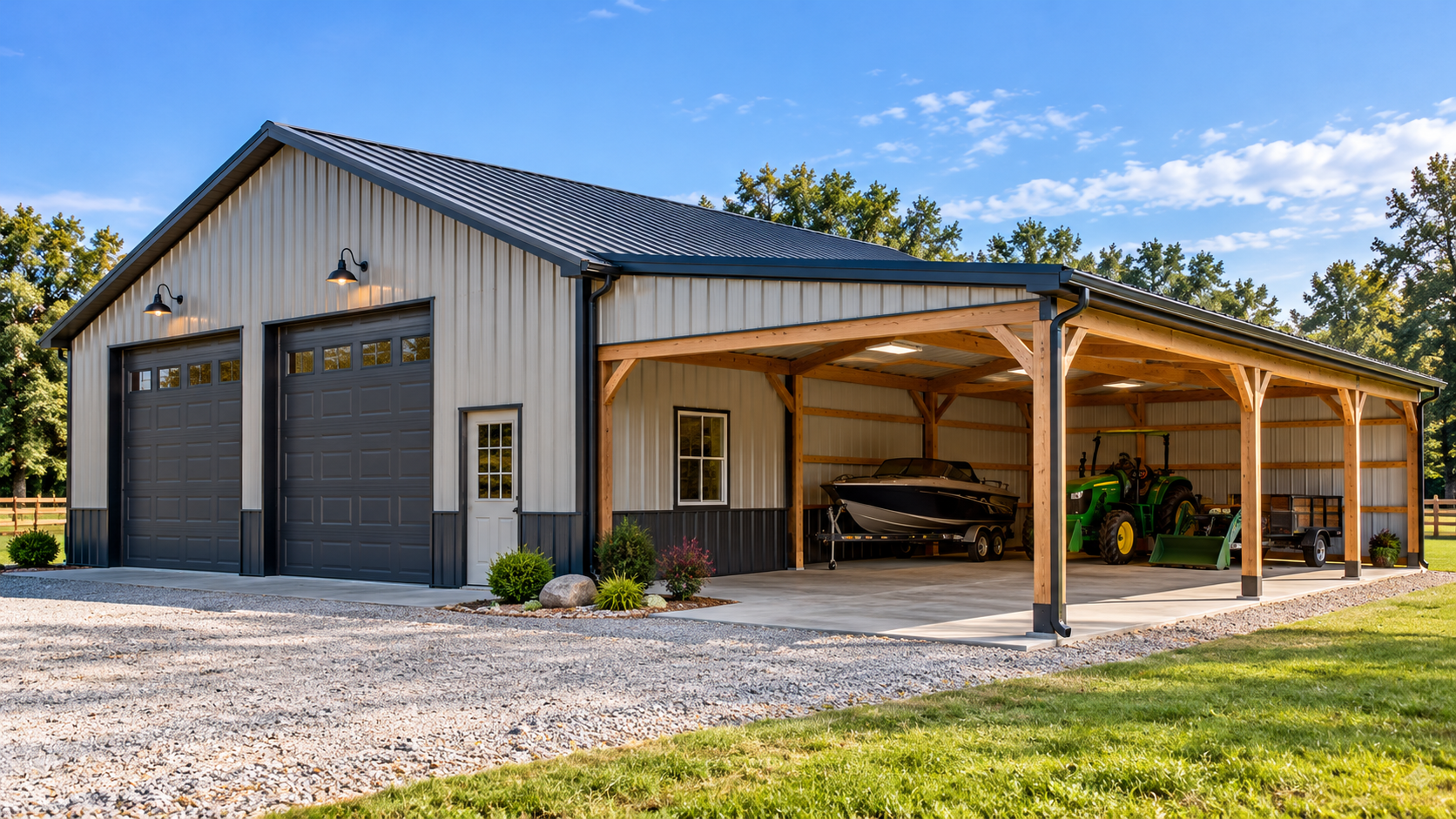

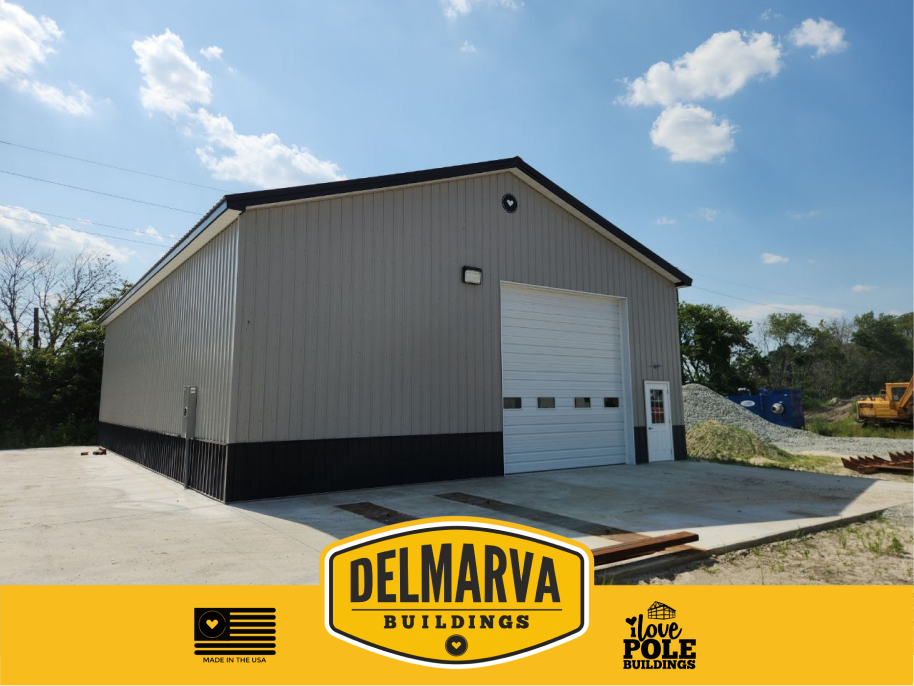
Barndominiums and pole barns share the same post-frame construction system, which leads many buyers to treat them as variations of the same thing. They are not. One is classified as a residence. The other is built for agricultural, commercial, or storage use. The metal building shell they share on the outside is where the similarity ends. From permitting and finish scope to financing and long-term value, the two structures follow entirely different paths.
Delmarva Buildings designs and builds both and we supply barndominium kits for buyers who want a faster path to the shell phase. Whether you are deciding between a full barndominium and a functional pole barn, or exploring whether a pole barn house gives you the best of both, the right answer depends entirely on what the building needs to do every day. This guide compares the two structures across the categories that matter most.
What Is the Core Difference Between a Barndominium and a Pole Barn?
A barndominium is a post-frame or steel-frame metal building designed and finished to residential standards. It includes full living spaces, insulation, drywall, plumbing, and all mechanical systems a home requires. It is classified as a dwelling, which affects how it is financed, insured, permitted, and appraised. The exterior looks like a metal building, but the interior is built to the same code requirements as any other primary residence.
A pole barn is a post-frame metal building that can serve a wide range of purposes, from agricultural and commercial use to storage, workshops, and even full residential living when finished to the appropriate standard. The interior can be left open and unfinished or built out to any level the owner needs. Both structures use the same post-frame framing principles, but their finish level, permitted use, and how they are classified for financing and insurance are what set them apart.
When Does a Barndominium Make More Sense?
A barndominium is the right structure when you need a code-compliant primary residence. It meets residential building codes covering insulation values, ceiling heights, egress requirements, fire separation, and mechanical system performance and it qualifies for residential financing and standard homeowner’s insurance, which matters both at purchase and at resale.
Post-frame construction gives barndominiums interior flexibility that traditional homes do not offer. Without load-bearing interior walls, living areas, shop sections, and garage bays can be configured in ways that conventional framing cannot accommodate. For buyers who want a primary residence that also supports working use of the property, a barndominium handles that combination more effectively than any other structure type in this category.
When Does a Pole Barn Make More Sense?
A pole barn is an excellent choice across a broad range of uses, from storage and agricultural operations to workshops, hobby spaces, and residential living. The post-frame system is highly adaptable: the same structure can be left unfinished for equipment storage, partially finished for a working shop, or fully finished and permitted as a residence. The right finish scope depends entirely on what you need the building to do, and pole barns give you the flexibility to build to exactly that level without overbuilding for your actual requirements.
A pole barn also has a faster path from planning to occupancy. The shell can be erected quickly once site work is complete, making it a practical solution when timeline is a priority. Whether the goal is covered equipment storage, a finished workshop, a hobby space, or a fully lived-in home, post-frame construction supports all of those outcomes from the same structural starting point.
What Is a Pole Barn House and Who Should Consider One?
A pole barn house is a post-frame structure that combines a finished residential section with an open shop or storage area under a single roofline. The living quarters are built and permitted to residential code. The shop or storage section is built to the functional standard appropriate for its use. A fire-rated wall separates the two zones as required by residential code when living space is adjacent to a garage or working shop.
A pole barn house suits rural property owners, tradespeople, and agricultural operators who want their primary residence and their working space on the same footprint. The combined build is often more cost-efficient than constructing separate structures, and a fire-rated wall between the residential and shop sections satisfies residential code while providing practical sound separation between zones.
How Do Permitting Requirements Differ?
A barndominium or the residential section of a pole barn house requires a residential building permit. Inspections cover foundation, framing, electrical, plumbing, insulation, and final occupancy. These steps are required for any structure that will be used as a primary dwelling and financed or insured as one. Lenders and appraisers require complete inspection records confirming the building meets residential code at every phase.
A standalone pole barn for storage or agricultural use is typically permitted as an agricultural or accessory structure, which involves a simpler process in most counties. If any portion of a pole barn is intended for human habitation, that section must be classified and permitted as residential. Misclassifying the use during permitting creates issues at inspection, at refinancing, and at any future sale of the property.
Which Structure Holds Its Value Better Over Time?
A barndominium holds value as residential real estate. Appraisers evaluate it against comparable home sales in the area, and lenders treat it as a standard real property asset. In rural markets where buyers actively look for properties that combine living space with functional shops or storage capacity, a well-built barndominium can be more attractive than a conventional home without those features.
A pole barn finished and permitted as a residence appraises as residential real estate just as a barndominium does. A pole barn left as an unfinished or partially finished structure is appraised on replacement cost and functional utility. For buyers whose priority is long-term residential value and resale clarity, building and permitting the structure as a residence, whether framed as a barndominium or a pole barn house, is what secures that appreciation path. For buyers who need functional working space at the lowest construction cost, an unfinished or lightly finished pole barn delivers reliable value without residential overhead.
Also Read: How to Soundproof a Workshop in Your Pole Barn
How Do You Make the Final Decision?
The decision starts with one question: what does the building need to do every day? Pole barns and barndominiums use the same post-frame structure, so the real distinction is in the finish level and permitted use. A fully finished and permitted pole barn home is a legitimate primary residence. A barndominium delivers the same outcome with a design process built specifically around residential living from the first drawing. Either path can get you to a home; the difference is in how the build is structured and managed from the start.
Getting the structure type right from the start affects every downstream decision including permits, financing, insurance, and long-term value. Delmarva Buildings builds both and supplies barndominium kits for buyers who want to move quickly through the shell phase. The cost of getting clear on this question before you build is always lower than the cost of correcting the wrong answer afterward.
Also Read: Pole Barn Homes & Residential Buildings
Conclusion
A barndominium is a post-frame home built and permitted to residential standards from the start. A pole barn is a highly versatile post-frame structure that can range from an open storage shell to a fully finished residence depending on how it is built out and permitted. A pole barn house combines dedicated living space and a functional shop or storage area under one roofline. Finish scope, permitting, financing, and long-term value all depend on what you build and how it is classified from the start. Delmarva Buildings designs and builds both barndominiums and pole barns across Maryland and the Delmarva Peninsula and offers barndominium kits for buyers who want a coordinated, efficient path to the shell. If you are working through which structure fits your property, your use case, and your goals, reach out for a straightforward assessment based on your specific site and requirements.