
You built your pole barn for storage, equipment, or work space. Now you are staring at all that unused vertical space above your head and wondering if there is a smarter way to use it. The good news is that adding an upper floor to a pole barn is absolutely achievable. The important thing to know upfront is that it is not a simple weekend project. It requires deliberate structural planning, an honest look at your existing building, and a clear understanding of what the process involves before you spend a dollar.
Whether you are thinking about a dedicated workspace, a storage loft, or a full barn renovation that adds a genuine living area, this guide walks you through every key consideration.
Can a Pole Barn Support a Second Floor?
Not every pole barn is a good candidate for adding an upper floor, and that answer comes down almost entirely to structural planning. The existing posts, footings, and framing all need to be evaluated before any design work begins.
A pole barn built to shelter equipment operates under very different load assumptions than one designed to carry the weight of a second floor. In most cases, the existing footings were not poured with those loads in mind, and adding significant weight without addressing this creates serious structural risk.
The size and spacing of your existing posts matter too. A standard pole barn with 6×6 posts set every 8 feet may be workable depending on the span and intended use, but this needs to be confirmed by a qualified structural engineer. Before committing to any barn renovation that involves an upper floor, have your building assessed professionally. It is the single most important step in the process.
What Are the Options for Adding an Upper Floor?
There are three main approaches to adding an upper floor to a pole barn, and the right one depends on how much space you need, what you plan to use it for, and how your current building is configured. Each comes with its own structural planning requirements, cost profile, and zoning considerations.
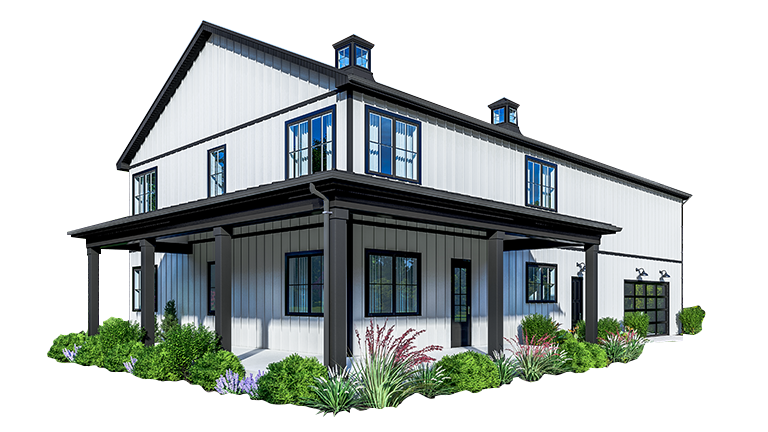
- Attic trusses: Designed with a habitable room built into the peak of the roof, creating an upper floor room typically 12 to 16 feet wide running the full length of the building. The ceiling slopes with the roof pitch, and no additional support posts are needed beneath, preserving the clear-span open floor plan.
- Gambrel trusses: Use a multi-pitch barn roof profile to create a square upper room with a flat ceiling and more usable headroom. A popular choice for buyers who want a functional, box-shaped upper floor space.
- Loft or mezzanine: Adds a partial upper floor to one section of the building. Requires a sidewall height of at least 16 to 18 feet and typically needs additional support posts beneath the floor framing, which interrupts the clear-span layout.
The option that works best for your barn renovation will depend on your intended use, your current sidewall height, and what your existing structure can support. Understanding the differences upfront saves you from costly redesigns mid-project.
How Much Does Sidewall Height Matter?
Sidewall height is one of the most critical factors in any upper floor project and one that catches many building owners off guard. For attic or gambrel trusses, the height is largely built into the truss design itself and may not require changes to your existing sidewall.
For a loft or mezzanine, sidewall height becomes a direct limiting factor. You need enough vertical clearance to provide functional headroom both below the loft floor and within the loft space itself, which is why most loft builds require a minimum sidewall height of 16 to 18 feet.
If your current sidewall height falls short, you have two paths: modify the existing structure to gain height, or choose a different design approach. If you are planning a new build or a full barn renovation, designing your sidewall height to accommodate a future upper floor from the outset is always the smarter and more cost-effective decision.
What Does It Cost to Add an Upper Floor?
Adding an upper floor is not inexpensive, and cost varies significantly depending on which option you pursue. Switching to attic or gambrel trusses typically adds 75 to 85 percent to the total truss cost compared to standard common trusses.
These trusses are larger, heavier, and need to be installed 2 feet on center instead of 4 feet on center, meaning twice as many are required. They are far more labor intensive to install, and depending on building size, crane use may be necessary.
A loft can sometimes come in at a lower price point, but it still requires additional material, labor, and structural planning. Proper engineering review and any footing upgrades needed to support added loads should be factored into your budget from day one. Barn renovation projects that cut corners on structure consistently cost more to fix than they would have to build correctly the first time.
Do You Need a Permit for a Second Floor?
In most jurisdictions across the United States, yes. Adding an upper floor triggers building permit requirements, and in some states those requirements are more involved than many owners expect.
Ohio building departments require stamped drawings from a licensed architect for any building with a second floor. Several Pennsylvania counties have similar requirements. Zoning restrictions add another layer, as some areas have height limits that may prevent your building from being tall enough to accommodate an upper floor regardless of your structural planning.
Buildings with agricultural status are often exempt from some of these requirements, but this varies by location and should never be assumed. Contact your local zoning and building departments before investing in design work or materials. A properly permitted barn renovation protects your investment, your insurance coverage, and your ability to sell the property in the future.
Also Read: Why Do Pole Buildings Use Steel Roofing?
What Are the Alternatives If a Second Floor Does Not Work?
If structural planning requirements, cost, or zoning restrictions make a full upper floor impractical, there are solid alternatives worth considering. The most straightforward is expanding the ground floor footprint, which is almost always more cost effective than adding a second level.
Adding interior partition walls within an expanded footprint gives you dedicated rooms or storage areas without the complexity of a full barn renovation. You keep the clear-span layout, simplify the build, and often end up with more usable space than a second floor would have delivered.
Another option is spread-web trusses, which spread the interior framing apart to create a shallow storage area where plywood can be laid down. This is suitable for light storage only, but it is an affordable solution that does not trigger additional zoning or building department requirements. For many building owners, one of these alternatives ends up being a better fit than a full second floor would have been.
Also Read: Why Should You Consider a Barndominium For Your Home Build?
Conclusion
Adding an upper floor to a pole barn is one of the most popular barn renovation questions we hear, and for a good reason. The potential to unlock significant square footage without expanding your footprint is genuinely appealing.
What separates successful projects from costly mistakes is the quality of structural planning that goes into them from the start. Sidewall height, footing capacity, truss selection, and local code requirements all need to be addressed before a single board goes up.At Delmarva Buildings, we help property owners across the United States work through these decisions with confidence. Whether you are exploring an upper floor addition, planning a full barn renovation, or trying to understand what your existing building can support.