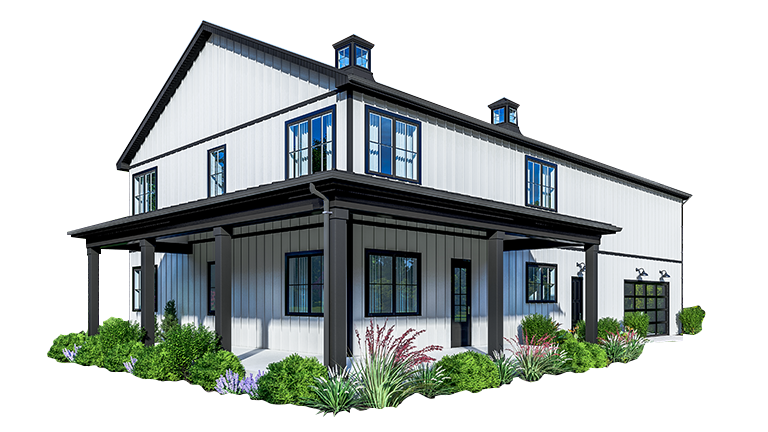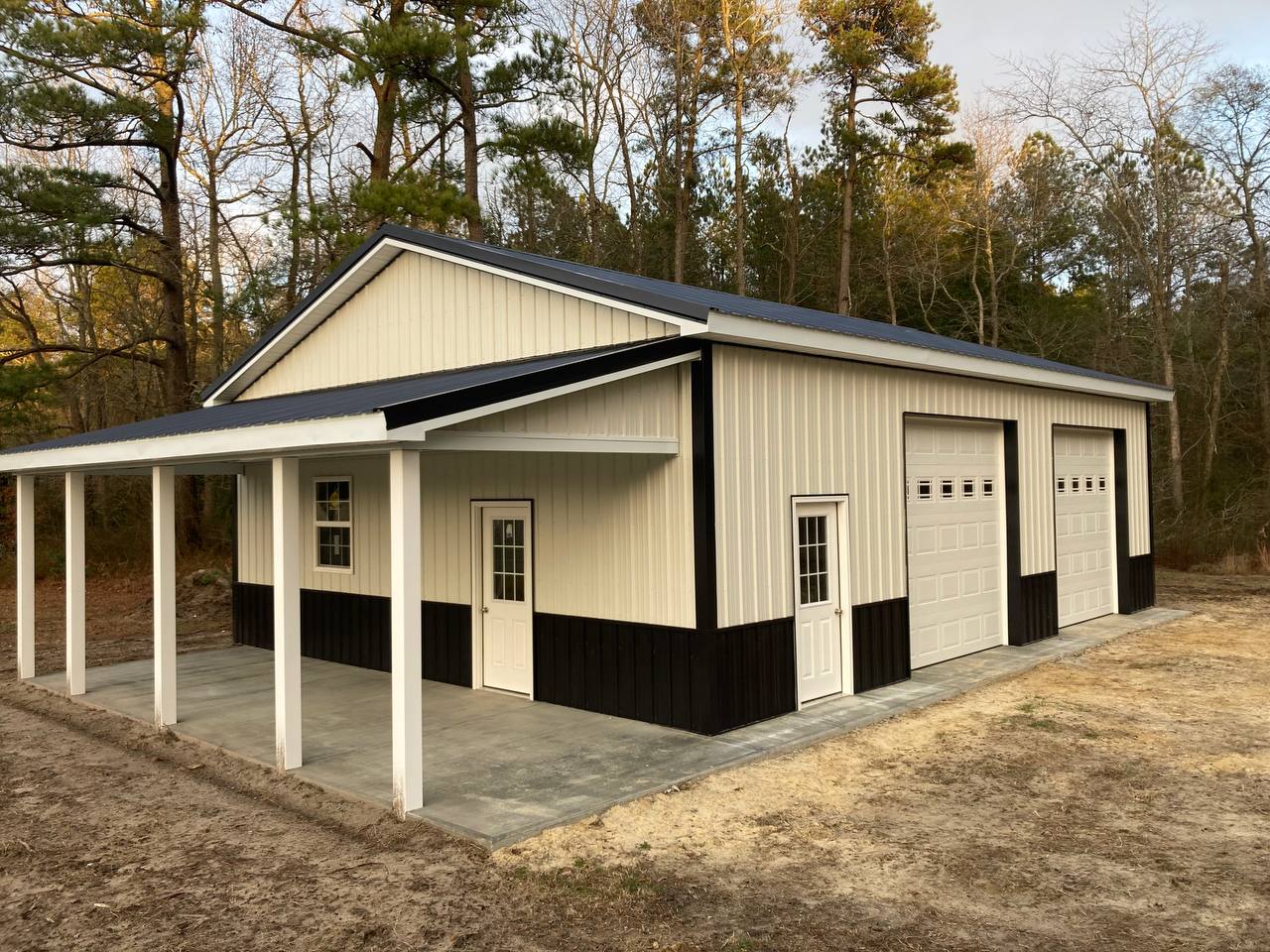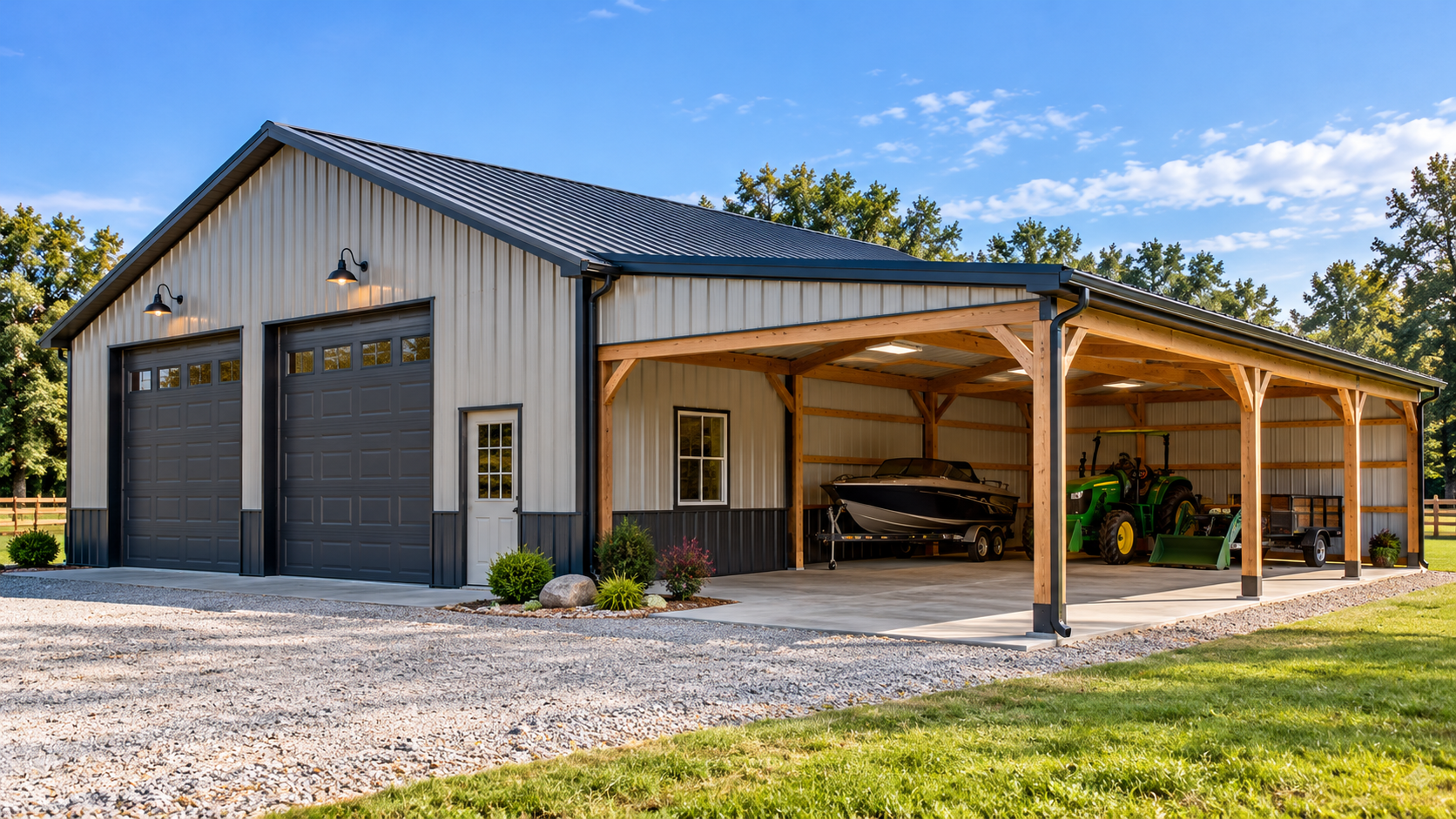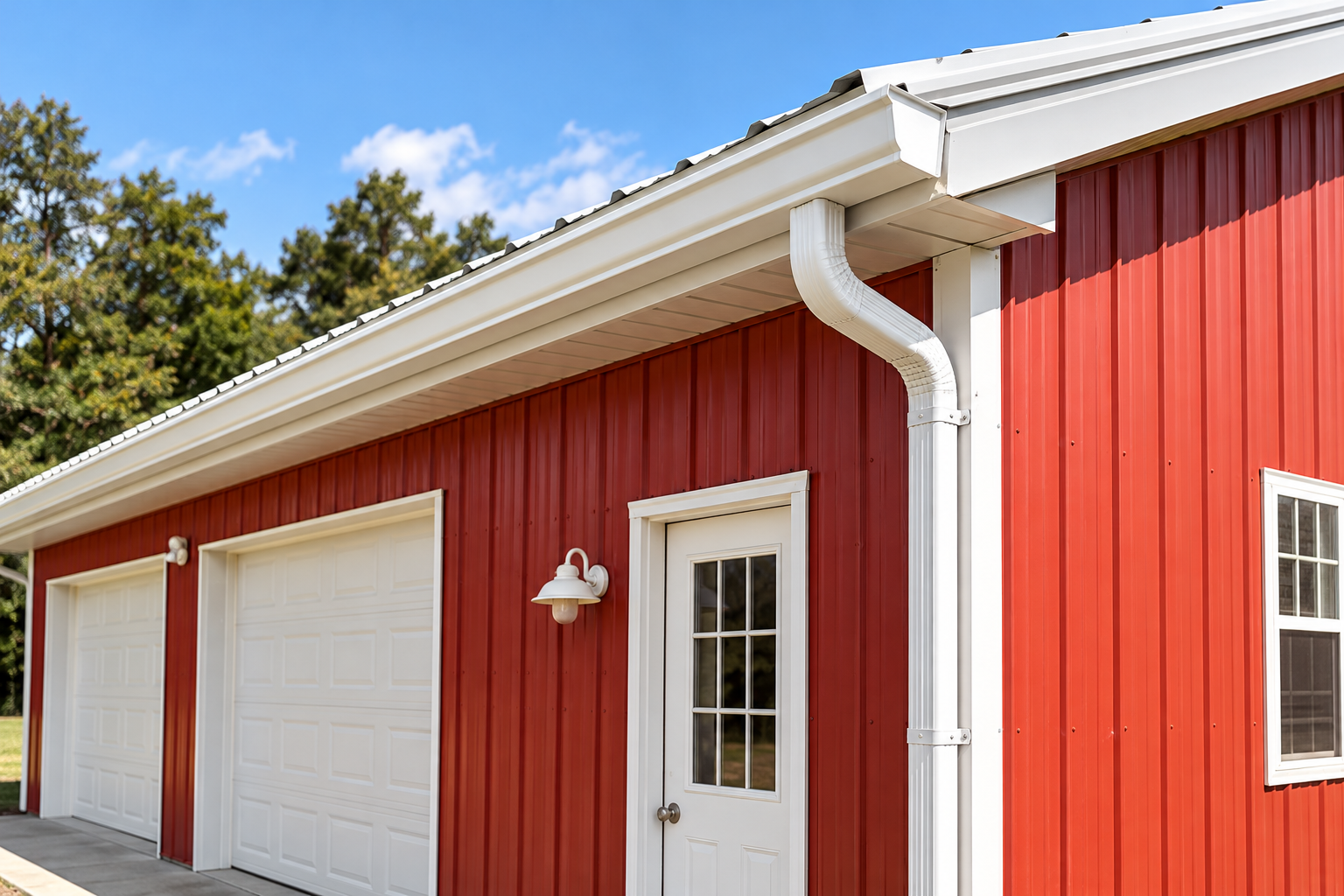

Most property owners add a cupola to their pole barn for one of two reasons: they want better airflow, or they want the building to look more finished. What surprises many of them is that a well-chosen barn cupola delivers both simultaneously, without the cost or complexity of a major renovation. It is one of the oldest features in American agricultural architecture and one of the most consistently requested additions on pole barns across the United States.
What is less well understood is how much variation exists in cupola types, sizes, and materials, and how much that variation matters to the final result. Getting these decisions right from the start is what separates a cupola that genuinely adds value from one that simply sits on the roof.
What Is a Barn Cupola?
A barn cupola is a small, elevated structure mounted at the ridge of a roof, projecting upward above the roofline. Most cupolas feature their own peaked roof and either louvered or windowed sides. Louvered cupolas use angled slats to allow airflow while deflecting rain and are the functional choice where barn ventilation is a priority. Windowed cupolas allow natural light into the upper interior but contribute little to airflow and are primarily decorative.
Cupolas have been part of American agricultural architecture since the country’s earliest barns were built. Before mechanical ventilation existed, a louvered barn cupola at the ridgeline was the primary means of releasing heat, moisture, and gases from the building interior. Modern roof design has brought ridge vents and other passive ventilation options into the mix, and a barn cupola works well alongside all of them. What sets it apart is that it contributes to airflow while simultaneously serving as a defining architectural feature of the building.
Benefits of Adding a Cupola
A barn cupola earns its place on a pole barn on multiple grounds at once. Each benefit below addresses a distinct aspect of building performance or appearance.
- Passive barn ventilation: Creates a natural exit for heat and humidity at the ridgeline, reducing condensation and improving air quality without fans or electricity.
- Architectural character: Introduces vertical interest to the roofline, giving the building proportion and visual completeness a bare ridge cannot achieve.
- Property value: Signals deliberate design and quality construction, recognized by appraisers and prospective buyers.
- Natural light: Windowed and combination cupolas bring daylight into the upper interior.
- Minimal maintenance: Steel and aluminum cupolas require almost no upkeep once properly installed and sealed.
- Design flexibility: Available in louvered, decorative, and combination configurations across a wide range of sizes and materials.
The investment is modest relative to the improvements delivered. For owners who want a pole barn that performs well and presents itself with architectural intention, a barn cupola is one of the most efficient uses of renovation budget available.
How Does a Cupola Improve Barn Ventilation?
The ventilation mechanism behind a barn cupola is based on the stack effect. Warm air rises toward the highest point of any enclosed space. In a pole barn, that point is the ridgeline. Without an exit there, heat, humidity, and airborne particles collect near the roof with nowhere to go. A louvered barn cupola installed over an opening at the ridge provides that exit. As warm air escapes through the louvers, it draws cooler, fresher air in through lower openings such as vented soffits, eave vents, or doors.
This process requires no mechanical assistance and functions year-round. Unchecked moisture accelerates corrosion, encourages mold growth, and damages stored materials and structural components. A properly positioned barn cupola reduces all of these risks. Paired with vented soffits or a ridge vent system, it forms part of a complete passive barn ventilation strategy that keeps the interior drier and better protected in every season.
What Does a Cupola Do for Roof Design?
A barn cupola changes how a pole barn reads from the outside in a way that is difficult to achieve through any other single addition. A continuous roofline with no relief is a flat horizontal statement. A cupola at the ridge introduces vertical punctuation that draws the eye upward and gives the building a finished, considered quality. On larger post-frame structures, one or more cupolas rebalance the visual weight of the roof design entirely.
The effect is visible from ground level and from a distance. A barn cupola communicates that the owner made deliberate choices about how the building was designed, which is reflected in how the property is appraised and valued. For pole barns in residential or mixed-use settings, a correctly proportioned cupola is one of the most cost-effective ways to elevate the entire structure.
What Size Cupola Does Your Pole Barn Need?
Sizing is one of the most consequential decisions in any barn cupola installation. A cupola too small loses its visual impact. One too large overwhelms the roofline. The standard guideline is approximately 1.25 inches of cupola base width for every foot of unbroken ridge length. A barn with a 40-foot ridge is well served by a base of around 50 inches as a starting point.
The most common sizes used on pole barns across the United States are:
- 24 x 24 inches: Suited to smaller barns and outbuildings.
- 36 x 36 inches: The most widely used size for standard pole barns.
- 48 x 48 inches: Appropriate for larger post-frame structures.
- Multiple cupolas: On longer ridges, two or more evenly spaced units often perform better than a single oversized one.
Ridge length, roof pitch, and building footprint all influence what reads correctly. Consulting with an experienced post-frame builder before ordering is the most reliable way to confirm the right choice for your roof design.
What Materials Are Available?
Steel cupolas, fabricated from 29-gauge pre-painted panels, are the most widely used option for metal post-frame buildings. They coordinate with metal siding and roofing, handle thermal expansion without distortion, and require virtually no upkeep. Other materials worth evaluating include:
- Aluminum: Lighter than steel, rust-resistant, and available in a broad range of factory paint colors.
- Vinyl: Resistant to rot, insects, and UV fading. A strong choice for humid or coastal environments.
- Wood: The most traditional aesthetic but requires consistent maintenance. Best for decorative use rather than active barn ventilation.
- Copper: Develops a characteristic patina over time. Not recommended on metal roofing due to galvanic corrosion risk.
Regardless of material, the cupola base must be properly flashed and sealed at the roof junction. This is the most critical installation detail and the most common source of water intrusion when overlooked.
Also Read: How Long Does It Take to Build a Barndominium With a Shop?
Functional vs. Decorative: Which Type Is Right?
A functional barn cupola is louvered and installed over an opening in the roof panels, creating a direct passage between the interior and exterior air. This is the configuration required for meaningful barn ventilation. A decorative cupola sits on a solid base with no roof penetration and improves appearance only.
If existing systems already provide adequate barn ventilation, a decorative cupola achieves the aesthetic goal without cutting into the roof. If airflow improvement is the objective, a louvered functional cupola is the correct choice. Combination designs incorporating louvered sides and windowed sections are also available for owners who want a single unit to serve both purposes.
Also Read: Is a Barndominium With a Shop a Good Investment? Resale & Long-Term Value
Conclusion
A barn cupola improves a pole barn on multiple levels at once. It strengthens passive barn ventilation, elevates the roof design, adds architectural character that increases property value, and requires minimal maintenance over the life of the building.
At Delmarva Buildings, we have worked with property owners across the United States who started with the same question and ended up with a post-frame building that performs better, looks more considered, and holds its value longer than they anticipated when they first broke ground.