
The pole barn you built years ago was designed with a specific purpose in mind. Over time, most property owners find that their needs evolve and the building they have no longer serves them. What makes a post-frame building such a compelling long-term investment is its adaptability. Its open structural design, wide clear spans, and durable construction make it one of the most renovation-friendly structures available.
In 2026, pole barn renovations across the United States are moving well beyond basic repairs. Property owners are upgrading their metal siding, fitting out dedicated workshop space, incorporating rustic interior finishes, and converting underutilized structures into multi-purpose properties. This guide covers the most popular renovation ideas this year and what each one realistically involves.
3 Reasons to Renovate Your Pole Barn
1) Structural Integrity
Any renovation plan should begin with an honest assessment of what the existing structure can support. Trusses, columns, and connection hardware all warrant a professional inspection before any investment is committed. Identifying what needs attention early is far less costly than discovering problems after renovation work has already begun. A building with a sound structural core is well positioned for meaningful upgrades that build on what is already there.
2) Extend the Building’s Useful Life
Post-frame buildings are built to last, and with the right attention they remain serviceable well into their third and fourth decade. Replacing the exterior cladding, improving insulation, and updating the interior finish can collectively restore a building’s performance to a standard that matches what it delivered when new. The most compelling renovations also expand what the building is capable of, reconfiguring a structure originally built for storage into a finished workshop, loft, or residential space.
3) Cost Savings Over New Construction
The cost of new post-frame construction has risen considerably, and for owners whose existing building is structurally sound, renovation frequently represents the more financially practical path. The starting point is a building already standing, permitted, and connected to utilities. Owners can also address the highest-priority upgrades first and defer lower-urgency improvements, keeping capital requirements manageable throughout the process.
Top Exterior Pole Barn Renovation Ideas in 2026
1) Upgrade Your Metal Siding
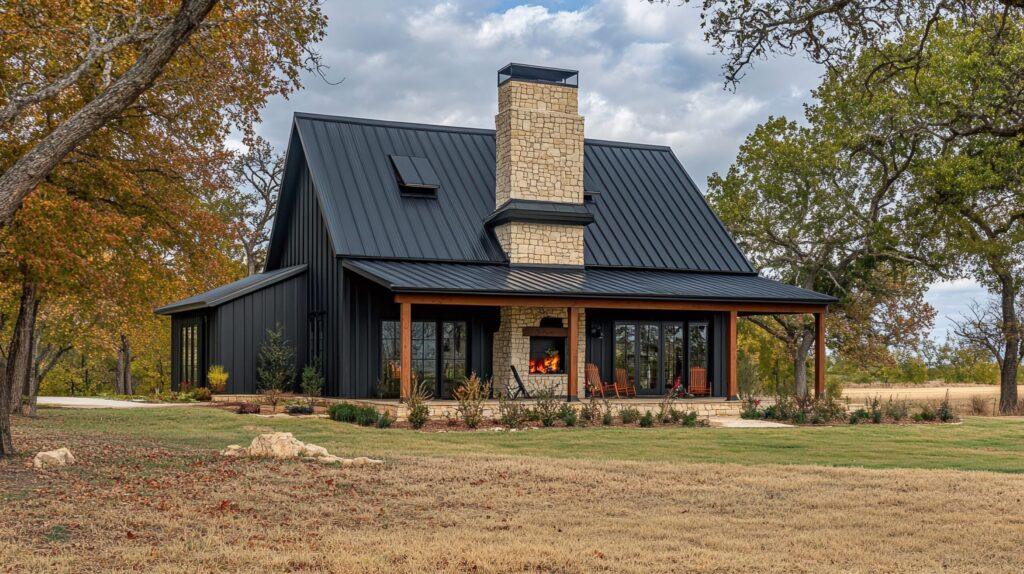
The most impactful exterior upgrade for a post-frame building is replacing or reskinning the metal siding. Modern panel systems offer a far wider range of colors, profiles, and finishes than what was standard five years ago. Matte black, charcoal, slate blue, and forest green are among the most requested in 2026, typically paired with high-contrast trim in black, bronze, or white. Beyond aesthetics, new metal siding improves weather performance and energy efficiency. Reskinning addresses moisture intrusion and insulation loss at the same time as it modernizes the exterior.
2) Install Wainscoting
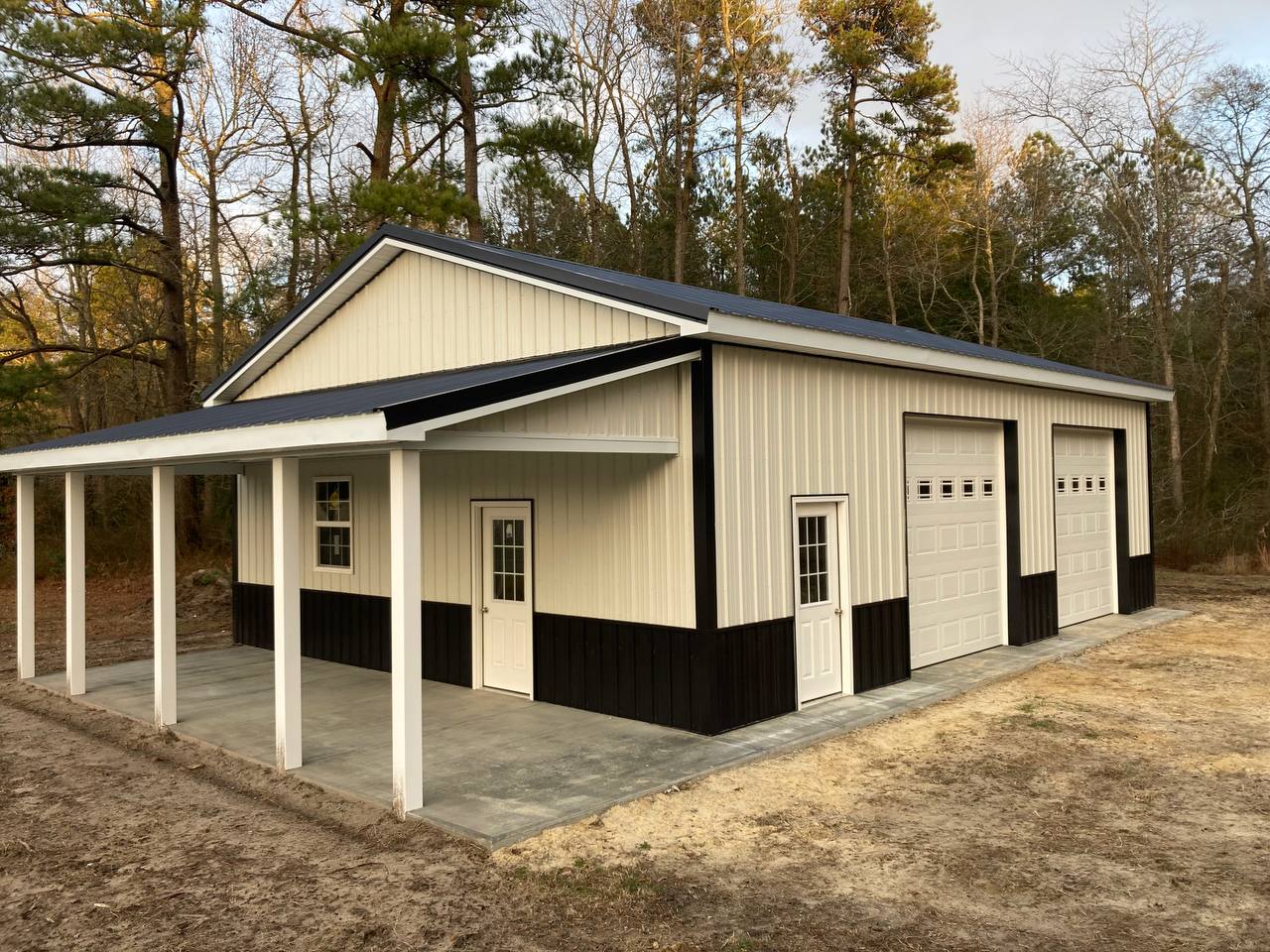
Wainscoting applies a contrasting metal panel along the lower portion of the exterior wall, commonly in a three-foot or four-foot band. It introduces a second material or color that adds visual depth to the facade while protecting the zone most exposed to ground-level impact, moisture, and wear. Stone-profile and timber-profile metal panels have become particularly popular choices in 2026, offering the character of natural materials with the durability of steel. For property owners who want a post-frame building that reads as refined rather than industrial, wainscoting is one of the most cost-effective ways to get there.
3) Upgrade Doors and Windows
Door and window selections have a disproportionate effect on how a post-frame building reads from the exterior, and in 2026 owners are treating them as a deliberate design decision rather than a functional afterthought. Dark color schemes create a cohesive, modern appearance that aligns with current architectural preferences across the United States. High-lift garage doors, sliding barn doors, and glass entry doors are all gaining traction as owners invest more attention in exterior presentation. Insulated overhead doors reduce heat loss considerably, and energy-efficient windows improve climate performance year-round. These upgrades pay for themselves over time through reduced heating and cooling costs.
4) Improve Curb Appeal
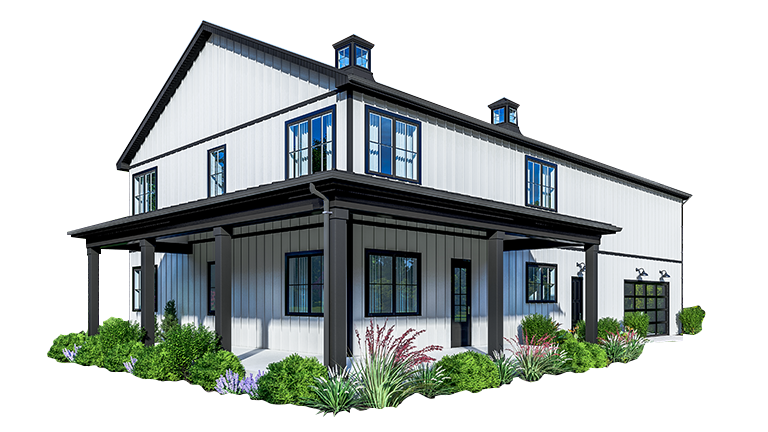
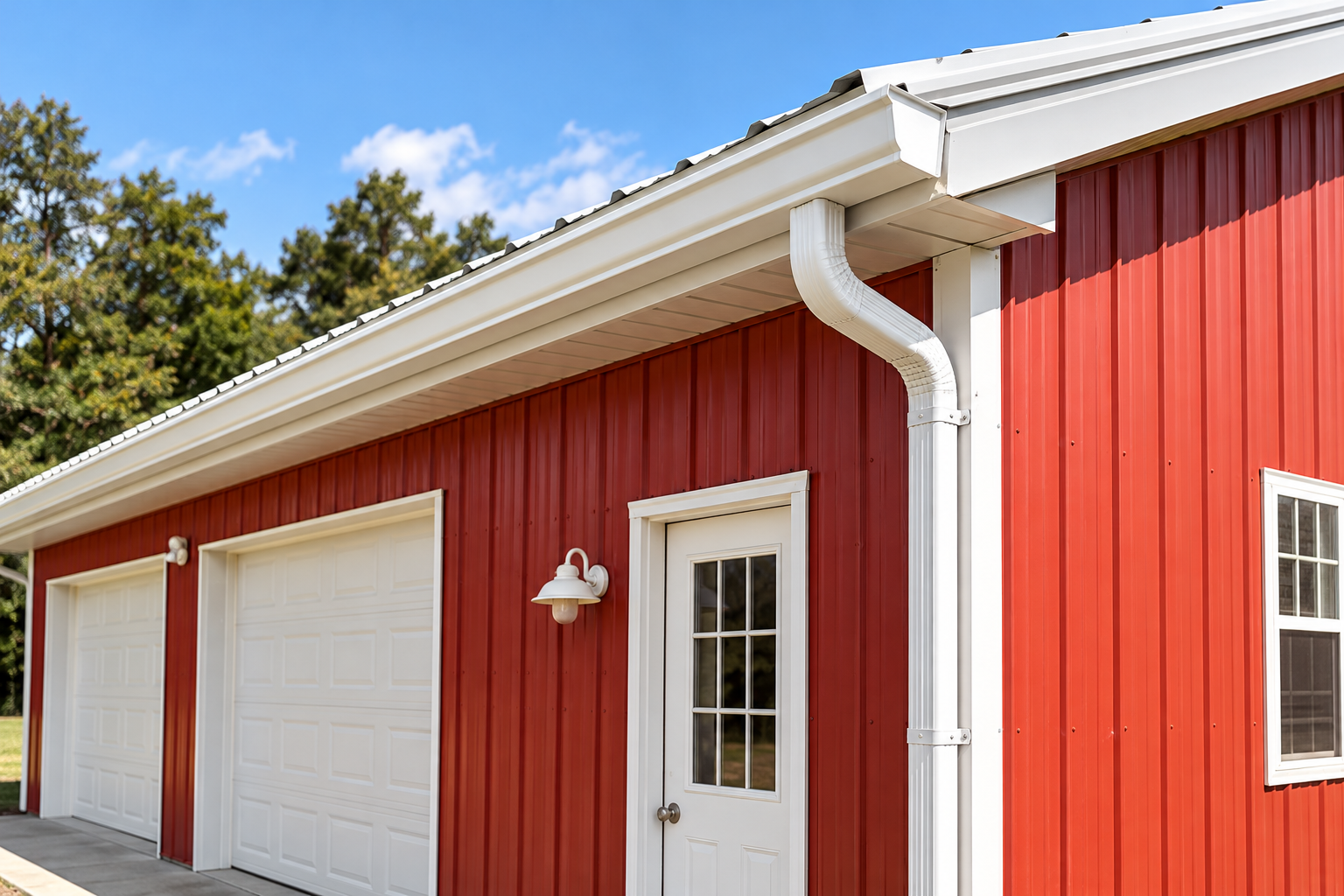
Meaningful improvements to a post-frame building’s exterior do not always require substantial investment. Several smaller additions, each modest in cost, can collectively shift how the building reads from the property and the road. Cupolas sit at the intersection of form and function, improving passive roof ventilation while contributing an architectural detail that signals care and intention. Well-placed exterior lighting transforms the building’s presence after dark and reinforces security. Gutter systems and downspouts channel water away from the foundation, protecting the structure at its base and extending its service life.
Additional exterior enhancements worth considering include:
- Decorative shutters and coordinated trim elements that reinforce the building’s color palette
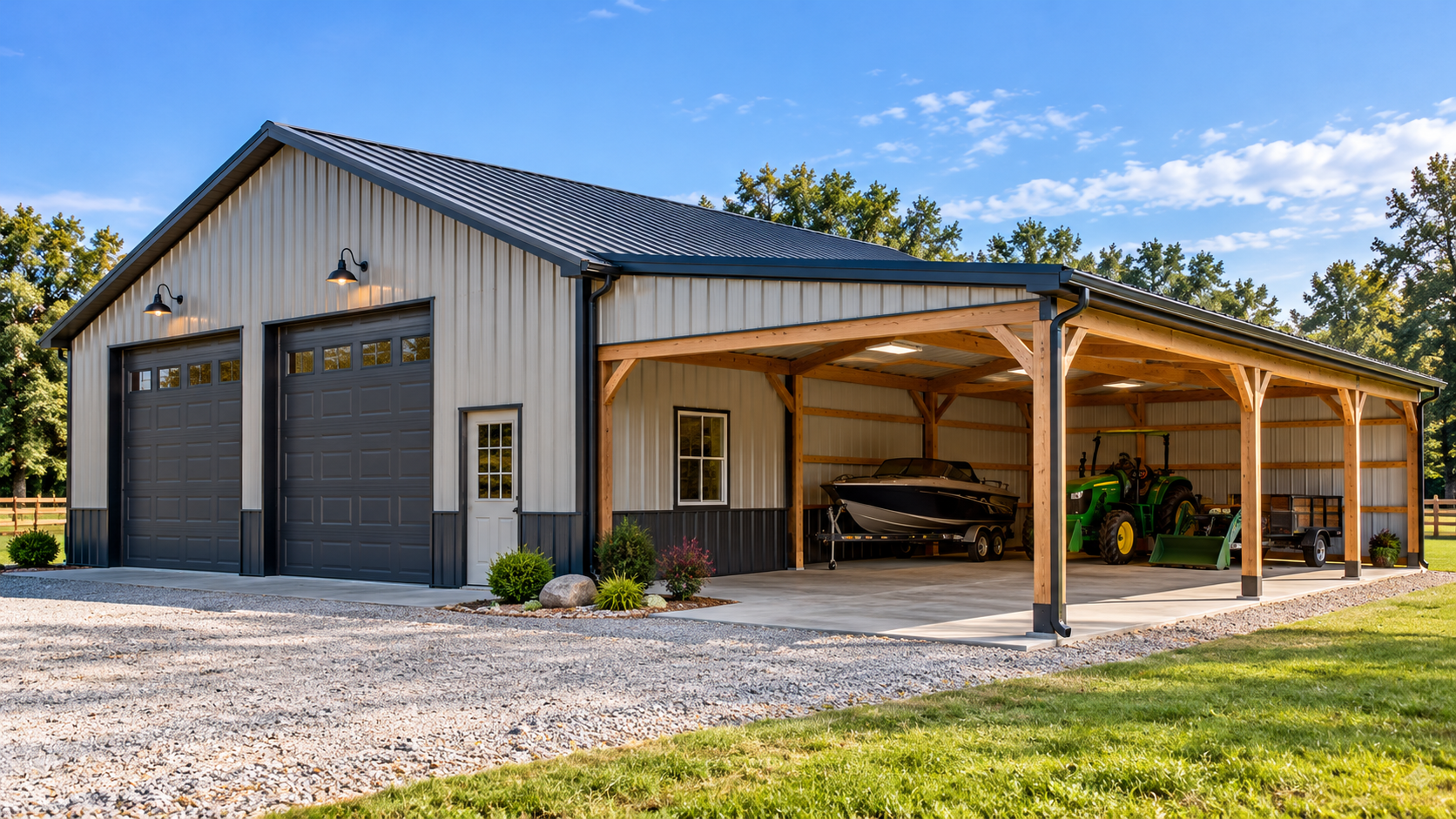
- Vented overhangs and lean-to additions that expand covered space and improve airflow
- Perimeter landscaping that grounds the structure visually in its setting
- Skylights or translucent roof panels that introduce natural light to the interior
Taken individually, each of these additions is a minor line item. Taken together, they communicate that the property has been maintained with attention and care, which is a quality that potential buyers and appraisers notice.
Also Read: Are Barndominium Kits a More Affordable Alternative to Custom Builds?
Top Interior Pole Barn Renovation Ideas in 2026
1) Choose an Interior Finish
The interior finish determines the building’s character and how well it holds up to daily use. In 2026, two directions dominate. The first is clean and functional: light-colored steel interior panels in white or light gray that reflect light, resist moisture and impact, and require minimal maintenance. This suits workshop space, vehicle storage, and garage conversions where performance takes priority. The second is the rustic interior, driven by owners undertaking residential conversions and shouse builds. Exposed timber framing, shiplap paneling, and board-and-batten wainscoting create warmth and texture that feel deliberate. Paired with contemporary fixtures and polished concrete floors, a rustic interior achieves one of the most sought-after aesthetics in barn conversions today.
2) Build Out a Workshop Space
The post-frame building’s clear-span interior gives it an immediate advantage for workshop use. No columns interrupt the floor plan, no structural constraints limit equipment placement, and no low ceilings restrict machinery. A sealed or epoxy-coated concrete slab and a 200-amp service with 220v circuits establish the foundation. From there, LED shop lighting, in-wall exhaust fans, large overhead circulation fans, spray foam insulation, and wall-mounted storage systems are the upgrades that convert raw space into a workshop space that performs at a professional level.
3) Add Living Quarters
The shouse, combining workshop and residential space in a single post-frame structure, has transitioned from a trend to an established building category in 2026. Property owners are converting pole barns into everything from studio apartments above a workshop to full barndominium builds with high-end finishes. The foundational requirement is bringing plumbing, HVAC, insulation, and electrical to residential code standards before finish work begins. A rustic interior approach aligns naturally with what buyers of converted barn properties seek, and when executed with proper planning, these conversions represent some of the most distinctive and cost-effective residential properties available today.
4) Add Storage with a Loft
A loft or mezzanine adds substantial usable square footage without expanding the building’s footprint. It can serve as storage, a home office, or an elevated space overlooking a workshop below. For buildings with a sidewall height of 16 feet or more, a loft is genuinely viable. A mezzanine requires structural engineering and typically introduces interior posts, and local building departments may require permits for habitable upper levels. For owners who approach these requirements methodically, a loft delivers strong return on investment and meaningfully expands the building’s long-term utility.
5) Upgrade the Flooring
An unpaved floor that suited basic storage creates real friction in a workshop environment or any regularly occupied space. Concrete controls dust, resists moisture, and provides a stable surface that holds up under continuous use. A sealed or epoxy-coated finish protects the slab from chemical exposure and abrasion. For higher-finish applications, polished concrete, porcelain tile, and engineered wood each bring a different quality to the space and can be matched to the aesthetic direction of the renovation.
Also Read: What Is the Average Cost Per Square Foot to Build a Barndominium?
Conclusion
A post-frame building is not a fixed asset but a flexible one. Whether the goal is to enhance the exterior with new metal siding, develop a professional workshop space, achieve a warm rustic interior, add living quarters, or improve storage capacity, the structural characteristics of post-frame construction make all of it achievable within a well-planned budget.At Delmarva Buildings, we work with property owners across the United States at every stage of the renovation process, from the first assessment of what the structure can support to the final decisions on finish level and scope.