
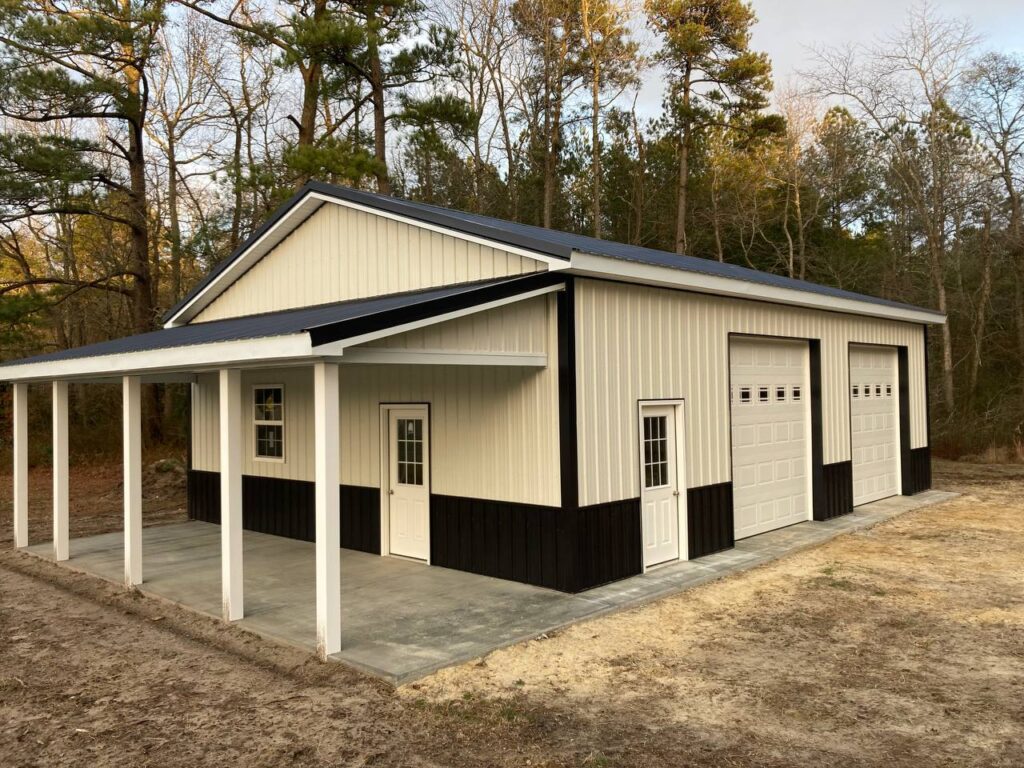
The posts in a pole building do the heavy lifting. They carry the roof, resist wind, and hold the whole structure in place, which means the base of each post, right where it meets the ground, is the most important area to protect. This is where post protection upgrades come in. Options such as Badger Block and other concrete barriers are designed to shield posts from the conditions that shorten a building’s life, and understanding them helps you build for the long term.
Delmarva Buildings has designed post-frame structures across Delaware, Maryland, Virginia, New Jersey, and Ohio since 1999, and post protection is one of the upgrades we discuss most when durability is the goal. This guide explains what post protection is, what concrete barriers and post upgrades actually do, and when they are worth adding to your building.
What is post protection and why does it matter?
Post protection refers to the methods used to shield a pole building’s posts from the moisture, soil contact, and physical damage that lead to decay and structural wear over time. Because the posts carry the load of the entire building, protecting them protects everything above.
The most vulnerable point on a wood post is near grade, the zone where the post meets soil, moisture, and oxygen. That combination is what drives rot, and it is why treated posts alone are not always the end of the durability conversation. Post protection upgrades add a barrier or a more durable base condition at exactly this point. Concrete-based options such as Badger Block are one category, sitting alongside protective sleeves and improved foundation details. The right choice depends on your building, your site, and how you use the space. Getting the base condition right early is far easier and cheaper than dealing with post problems years down the line.
What do concrete barriers and post protection upgrades actually do?
Concrete barriers and post protection upgrades work by controlling the conditions at the base of the post and, in some cases, by shielding posts from physical impact. They address several risks at once.
- Moisture and rot protection: By separating the post from constant soil and moisture contact, these upgrades reduce the main cause of decay at grade.
- A stable, durable base: Concrete-based protection provides a firm, consistent condition at the bottom of the post, which supports long-term structural performance.
- Impact protection: Concrete barriers and bollards can also protect posts and walls from being struck by vehicles, equipment, or livestock, which is a real concern in working buildings.
- Cleaner base-of-wall condition: A defined, protected base helps keep the bottom of the building tidy and easier to maintain.
Different products serve different priorities. Some focus on rot prevention at the post base, while others, like protective concrete barriers and bollards, focus on guarding against impact. Many working buildings benefit from both. If durability is a top priority, it is worth reviewing the building technical specifications with your builder so the base detail and post protection are chosen deliberately rather than by default.
Also Read: Best Pole Barn Uses on Maryland’s Eastern Shore
Do you need post protection upgrades in the Mid-Atlantic climate?
For many buildings across the Delmarva Peninsula and the wider Mid-Atlantic, post protection upgrades are a worthwhile consideration because of the region’s moisture and soil conditions. Coastal humidity, seasonal rain, and areas with high water tables all raise the moisture exposure at the base of a building’s posts.
Soil type and drainage vary widely across Delaware, Maryland, and Virginia, and wetter, poorly draining sites put more stress on posts at grade. In these conditions, adding protection at the post base is a practical way to build for the long term rather than an unnecessary extra. Buildings on well-draining, drier sites face less risk, but the upgrade still adds a margin of durability. Impact protection is a separate question driven by use rather than climate: a building with heavy vehicle or equipment traffic benefits from concrete barriers regardless of the weather. The most reliable way to decide is to have your specific site and intended use reviewed, so the recommendation fits your conditions rather than a general rule.
What are the main types of post protection to consider?
There are a few broad categories of post protection, and they can often be combined depending on your goals. Knowing the general options helps you have a productive conversation with your builder.
The first category is base and rot protection, which includes concrete-based barriers such as Badger Block and protective sleeves that separate the post from soil and moisture at grade. The second is foundation and anchoring details, which focus on how the post is set and supported for long-term stability. The third is impact protection, which includes concrete barriers and bollards placed to shield posts and walls from vehicles, equipment, and animals. Which combination is right depends on whether your priority is rot resistance, structural durability, impact defense, or all three. A working farm or agricultural building with equipment traffic has different needs than a finished custom garage used mainly for vehicles and storage. Because specific products, sizes, and availability can vary, confirm the exact post protection options with your builder for your project.
How do post protection upgrades affect the building’s lifespan and value?
Protecting the posts protects the part of the building that everything else depends on, so these upgrades support both the lifespan and the long-term value of the structure. A post base that stays dry and undamaged is far less likely to become a costly repair later.
Beyond avoiding problems, a well-protected building holds its performance and appearance over the years, which matters whether the building is a working ag structure or part of your property’s value. It is also worth understanding how a builder stands behind the structure itself. Delmarva Buildings backs its structures with a lifetime structural warranty, and pairing solid structural design with the right post protection is how you get the most reliable long-term result. Think of post protection as a modest upfront investment that pays back through fewer problems and a longer service life.
Conclusion
The posts are the foundation of a pole building’s performance, and protecting them is one of the smartest long-term decisions you can make. Post protection upgrades like Badger Block and other concrete barriers guard against the moisture, soil contact, and impact that shorten a building’s life, and they matter most in humid conditions and heavy-use buildings common across Delaware, Maryland, and Virginia.
Whether you need rot protection, impact defense, or both comes down to your site and how you use the space. If long-term durability is a priority, you can request a free, no-obligation quote and talk through the right post protection options for your building with an experienced local builder.
FAQ
It is any method used to shield a pole building’s posts from moisture, soil contact, or physical impact at the base, where posts are most vulnerable. Options include concrete barriers such as Badger Block, protective sleeves, and improved foundation details.
Concrete barriers can provide a durable, stable base condition and separate the post from constant soil and moisture contact, which reduces the risk of rot. Barriers and bollards can also shield posts and walls from being struck by vehicles, equipment, or livestock.
For many buildings, especially in humid or poorly draining conditions or in high-traffic working buildings, they are a practical way to extend the building’s life. The best way to decide is to review your specific site and intended use with your builder.
Treated posts resist decay, but the base of a post near grade still faces heavy moisture and soil exposure. Post protection upgrades add a further barrier at that vulnerable point, which is why many owners choose to add them for long-term durability.